When an outage costs more than inconvenience
For a household, a long outage is miserable. For a business, it's lost revenue every hour the doors are closed, plus whatever spoils, fails or walks out the door in the meantime. After a hurricane in eastern North Carolina, the businesses that have power are often the ones the community depends on: the grocery, the pharmacy, the gas station, the hardware store, the church that becomes a shelter.
Eastern NC Generators connects businesses with a licensed North Carolina electrical contractor and authorized Generac sales and service dealer who handles commercial and industrial standby generator projects, from a small office to larger facilities.
Who needs commercial backup power
- Restaurants, groceries and convenience stores. Walk-in coolers and freezers hold thousands of dollars of stock. A generator keeps refrigeration and point-of-sale running and lets you open while competitors are closed.
- Medical and dental offices, pharmacies and clinics. Refrigerated medications, patient records, imaging and climate control.
- Farms. Poultry houses and hog operations depend on ventilation, feed systems and water. Without power, animals are at risk within hours in summer heat. Irrigation, grain drying and milk cooling have the same problem.
- Churches and community buildings. Many serve as gathering places or shelters after storms.
- Offices and professional services. Servers, phones, internet and security systems.
- Shops, manufacturing and warehouses. Equipment, security and climate-sensitive inventory.
- Assisted living and group homes. Residents who depend on medical equipment and climate control.
- Gas stations and auto services. Pumps and lifts that the area needs after a storm.
How commercial generators differ from home units
Commercial projects use the same idea as a home standby system: a generator, a transfer switch and a fuel supply. But the details change:
- Size. Commercial loads are larger, so these are often liquid-cooled generators with more capacity than residential air-cooled units.
- Three-phase power. Many businesses have three-phase electrical service. The generator and transfer switch must match it.
- Fuel. Natural gas and propane are common. Larger units may run on diesel with an on-site fuel tank sized for the run time you need.
- Engineering. Larger projects may need load studies, coordination with your utility, structural work for the pad, and plans submitted with the permit application.
- Code requirements. Some facilities, like healthcare and assisted living, have specific requirements for emergency power. The contractor will identify what applies to your building.
- Maintenance. Commercial generators need a regular service schedule, and some facilities must keep testing records.
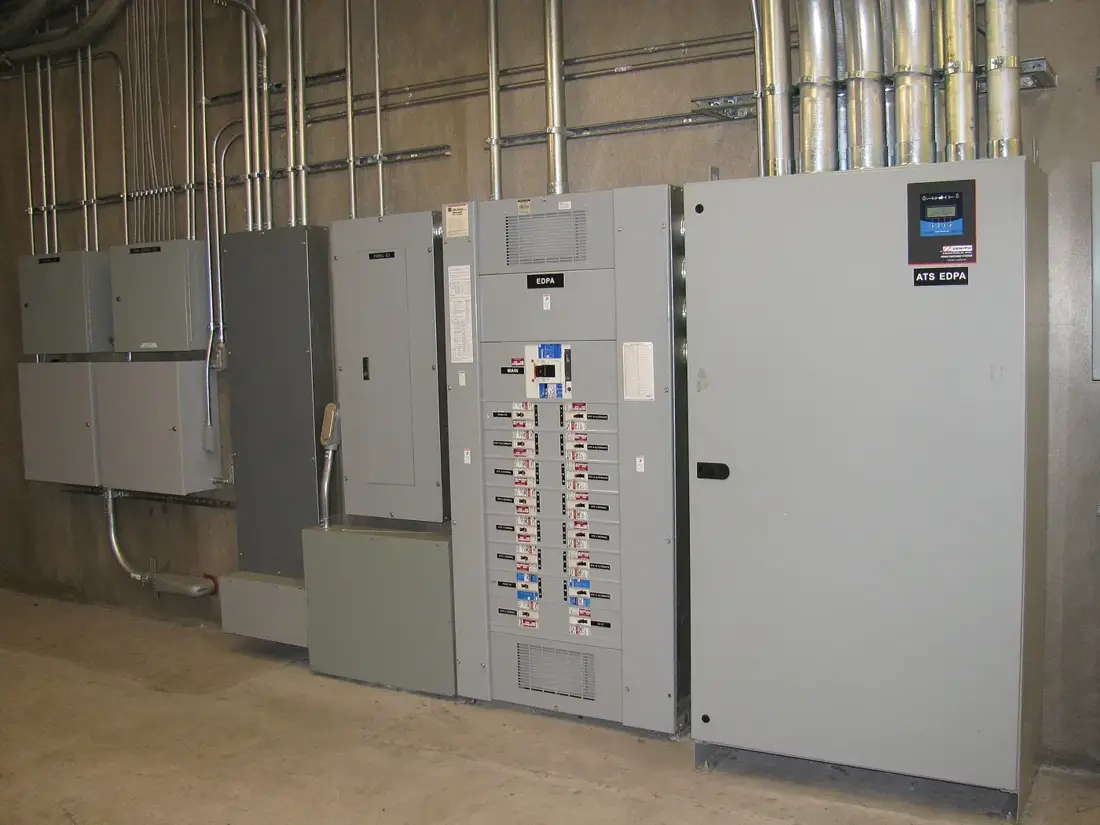

Sizing a commercial generator
Sizing starts with what has to keep running. Some businesses back up the whole building; others choose critical loads only, like refrigeration, a server room, ventilation fans or a well pump, to keep the generator and fuel costs reasonable. The contractor reviews your electrical service, utility bills or metered load data, and the equipment you consider critical, then recommends a size and transfer switch setup.
Motors are the main thing to plan for. Walk-in compressors, poultry house fans, well pumps and HVAC units all draw a surge when they start. A generator has to handle those starts, not just the running load.
How installation works
Site visit
An installer walks the property, looks at your electrical panel and gas or propane setup, and picks a spot for the unit that meets clearance and flood rules.
Sizing
You decide what should run during an outage, from a few essential circuits to the whole house. That choice sets the generator size and the transfer switch.
Permit
The contractor pulls the electrical permit, and a gas or plumbing permit where needed, from the city or county that covers your address.
Gas line or propane tank
Natural gas homes may need a meter upgrade from the gas company. Propane homes get a tank sized for multi-day run time and a line to the unit.
Installation
The pad is set, the generator is placed and the transfer switch is wired into your panel. Most residential installs take one to two days on site.
Inspection and startup
The local inspector signs off, the unit is started and tested under load, and you are shown how it exercises itself and how to check it.
For commercial work, expect the site visit to include a closer look at your service and loads, and the permit stage to take longer if plans are required.
Agricultural backup power
Eastern North Carolina is one of the most important farming regions in the state, and a power failure on a farm can mean losing animals rather than just losing time. Poultry and hog operations need ventilation, cooling, feed and water systems running continuously in summer. The contractor can size standby generators for individual houses or a whole farm, with automatic transfer so the system responds even when no one is on site at 3 a.m.
After installation
Commercial generators should be exercised regularly and serviced on a set schedule: oil and filters, coolant, batteries, belts and hoses, fuel quality for diesel units, and transfer switch testing. The dealer offers service agreements and can keep a record of testing and maintenance. See generator repair and maintenance.
Areas served
Commercial generator installation is available across eastern North Carolina, including Kinston, Goldsboro, Rocky Mount, Washington, Havelock, Greenville, New Bern, Jacksonville, and Wilson. See the full service area. For homes, see whole house generator installation.
Common questions
What size generator does my business need?
It depends on whether you're backing up the whole building or critical loads only, and on how many large motors start at once. The contractor reviews your electrical service and equipment and recommends a size.
Can a generator handle three-phase power?
Yes. Commercial generators and transfer switches are available for three-phase service. They must be matched to your building's voltage and phase.
Do you install generators for poultry and hog farms?
Yes. Agricultural standby systems are sized for ventilation fans, feed and water systems, and transfer automatically when the power fails.
Should a commercial generator run on diesel or natural gas?
Natural gas avoids fuel storage and refueling. Diesel suits larger loads and sites without gas service, but needs a fuel tank and fuel maintenance. Propane is another option. The contractor will lay out the trade-offs for your site.
How long does a commercial generator installation take?
Smaller commercial jobs can be similar to a large residential install. Bigger projects that need engineering, plans and utility coordination take longer. You'll get a timeline with your quote.
Do commercial generators need regular testing?
Yes. They should be exercised and serviced on a schedule, and some facilities are required to keep testing records. The dealer offers service agreements.