Generac standby generators
Generac is the best-known name in home standby power and the brand you see most often beside houses across eastern North Carolina. Its home standby generators run on natural gas or propane, connect to your home through an automatic transfer switch, and start on their own when the power goes out.
Eastern NC Generators connects you with a licensed electrical contractor who is an authorized Generac sales and service dealer. That means the person quoting your job is trained on Generac equipment, can order units and parts directly, registers your warranty, and can do warranty repairs if something goes wrong later.
Eastern NC Generators is not Generac and is not owned by Generac. We use the brand name to describe the equipment the dealer installs.
Air-cooled and liquid-cooled models
Generac's home standby range falls into two broad groups.
Air-cooled home standby generators are what most houses get. They come in a range of sizes that cover everything from a few essential circuits to whole-house coverage in a typical home. They are compact, quiet for their output, and designed to sit outdoors close to the house within the clearances Generac specifies.
Liquid-cooled generators use a radiator and coolant like a car engine. They are built for larger loads and longer, harder running: big homes, homes with several large air conditioners or heat pumps, shops, farms and small commercial buildings. They cost more and are larger, but they are the right tool when an air-cooled unit isn't enough. For business installations, see commercial generators.
Within each group there are several sizes. The dealer recommends a model after a load calculation based on your appliances, your heating and cooling, any well or sump pumps, and what you want running during an outage. Bigger isn't automatically better: an oversized generator costs more to buy and to run, and an undersized one will overload when the air conditioner and well pump start together.
Transfer switches and load management
Every Generac standby system needs an automatic transfer switch. For whole-house coverage, the switch is usually service-rated and installed where the power enters the house. For essential-circuit setups, a smaller switch feeds a separate panel containing just the circuits you've chosen.
Generac also offers load-management modules that let a smaller generator handle a larger house. They hold back big appliances like a second air conditioner or an electric water heater, and let them run only when there is spare capacity. Done right, this can save you from buying the next size up. The dealer will tell you whether load management makes sense for your house. More on transfer switches.
How installation works
Site visit
An installer walks the property, looks at your electrical panel and gas or propane setup, and picks a spot for the unit that meets clearance and flood rules.
Sizing
You decide what should run during an outage, from a few essential circuits to the whole house. That choice sets the generator size and the transfer switch.
Permit
The contractor pulls the electrical permit, and a gas or plumbing permit where needed, from the city or county that covers your address.
Gas line or propane tank
Natural gas homes may need a meter upgrade from the gas company. Propane homes get a tank sized for multi-day run time and a line to the unit.
Installation
The pad is set, the generator is placed and the transfer switch is wired into your panel. Most residential installs take one to two days on site.
Inspection and startup
The local inspector signs off, the unit is started and tested under load, and you are shown how it exercises itself and how to check it.
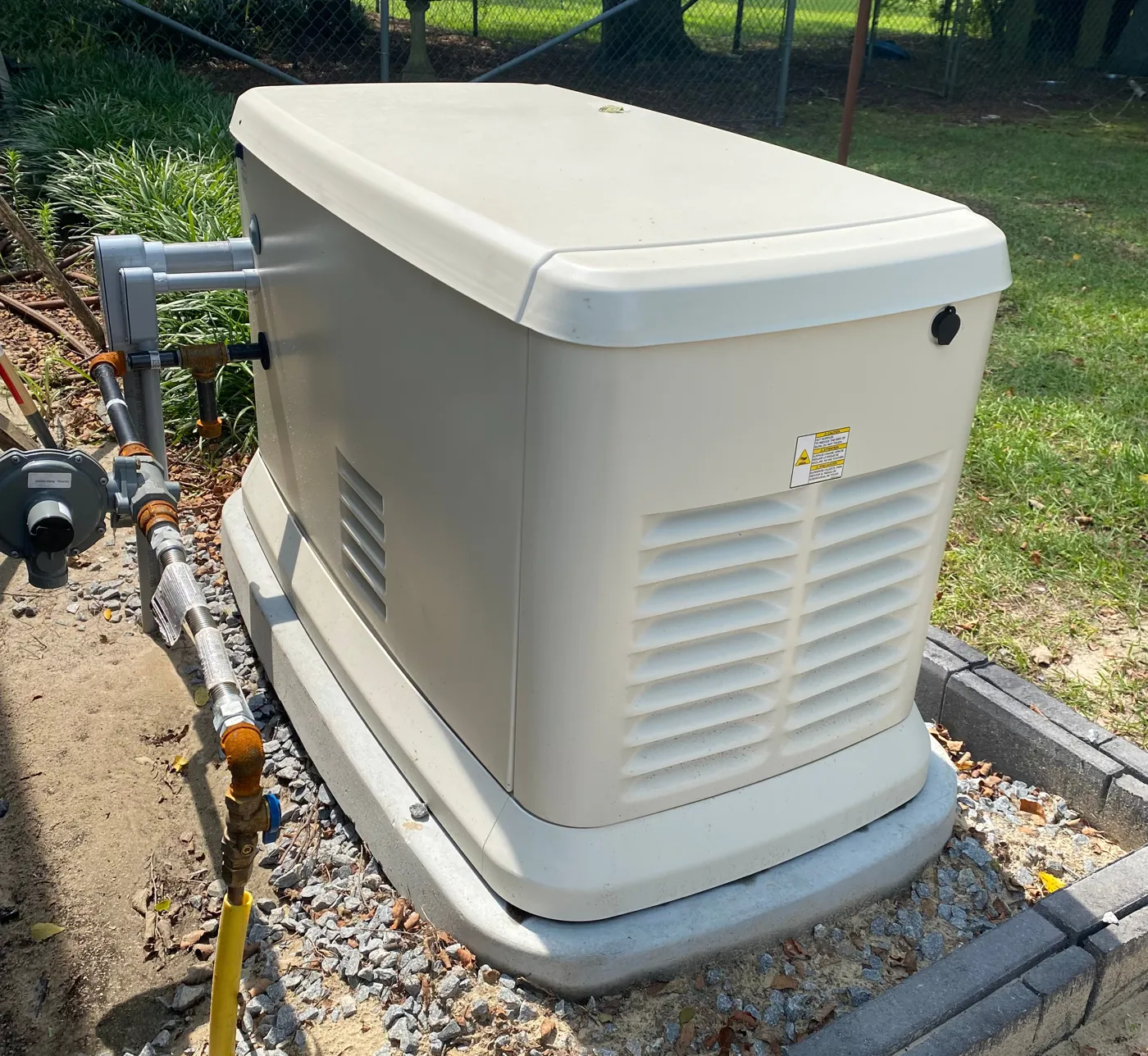
Why authorized installation matters
Anyone with an electrical license can technically install a generator, but there are good reasons to use an authorized dealer:
- Warranty. Generac's warranty depends on the unit being installed correctly and registered. An authorized dealer does the startup and registration as part of the job and knows what the warranty requires.
- Correct installation. Clearances from openings, pad requirements, gas pipe sizing and transfer switch wiring all follow Generac's installation manual. Mistakes in gas pipe sizing in particular are a common cause of generators that struggle under load.
- Parts and service. A dealer can get Generac parts and has technicians trained on the equipment for maintenance and repairs.
- Permits and inspection. The installation is permitted and inspected by your city or county, so it meets the electrical and gas code.
Remote monitoring
Most current Generac home standby generators can connect to Generac's Mobile Link monitoring, which shows the generator's status on your phone. You can see when it last exercised, whether it's running during an outage, and if it needs maintenance or has a fault. For people who travel, own a second home on the coast, or care for a parent in another town, it is a useful extra. The dealer can set it up at startup and can, with your permission, see alerts and plan service visits.
What a Generac installation includes
A typical Generac standby installation from the dealer includes:
- A free site visit and load calculation
- A written quote with the model, transfer switch and all work listed
- Electrical and gas permits from your city or county
- A pad and placement that meet Generac's clearances and local flood rules
- Gas piping to the unit from your meter, or a propane tank and line arranged with your propane supplier
- Transfer switch installation and wiring
- Startup, testing under load and warranty registration
- A walkthrough of how the generator works, how it self-tests and what maintenance it needs
Fuel options
Generac home standby generators run on either natural gas or propane, and most can be set up for either. Natural gas homes may need a larger meter from the gas company. Propane homes need a tank big enough to run the generator for several days. See propane and natural gas generators.
Servicing an existing Generac
If you already own a Generac that isn't running right, is showing a fault code or hasn't been serviced in a while, the dealer can help. See generator repair and maintenance.
Areas served
Generac installation is available across eastern North Carolina, including Kinston, Goldsboro, Rocky Mount, Washington, Havelock, Greenville, New Bern, Jacksonville, and Wilson. See the full service area.
Common questions
Are you Generac?
No. Eastern NC Generators connects homeowners with a licensed North Carolina electrical contractor who is an authorized Generac sales and service dealer. Generac makes the equipment; the dealer sells, installs and services it.
What size Generac do I need?
That depends on your home's loads and what you want to run. The dealer does a load calculation at the free site visit and recommends a model, along with the right transfer switch and any load management.
Does Generac installation include the permit?
Yes. The dealer pulls the electrical permit and any gas permit, and schedules the inspections with your city or county.
Can a Generac run on propane?
Yes. Generac home standby generators run on natural gas or propane. Propane needs a tank sized for how long you want to run.
Will the dealer service my Generac after it's installed?
Yes. The dealer offers annual maintenance and repairs, including warranty work on Generac units.
How do I know if my Generac warranty is active?
Warranty coverage depends on proper installation and registration. The dealer registers new units at startup, and can check the status of an existing unit if you're unsure.